Apart from during reading, can parents utilize dialogic techniques in their everyday lives?

Parenting Articles
Parenting Articles

Source: Educational psychologists, Shum Ka Man and Tang Wai Yan


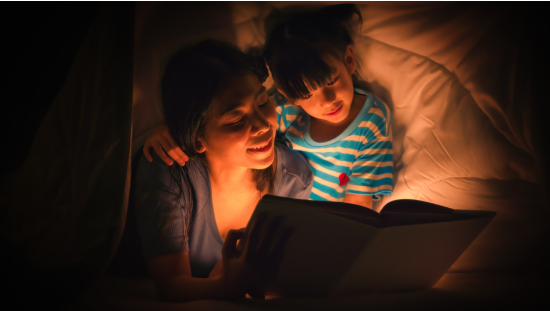
The techniques used in dialogic reading, including questioning and the subsequent interaction between parents and children, can actually be applied and practiced not only in reading but also in everyday life.


For example, during playtime or when encountering something new while out shopping or seeing objects around, these questioning methods can be applied. As for the steps, we engage in a conversation and exchange with the child. For instance, if we are playing with trains at home, parents can use a questioning approach like, ‘When we’re on transportation, what do we usually ride?’


These methods can encourage children to express themselves more and foster greater interaction with their parents. Besides play, children often enjoy drawing. During the process of drawing, you can also employ dialogic reading techniques. For example, ask questions like, ‘What is the content of this drawing?’ ‘What is this?’ ‘When did you see this? Could it be related to the playground equipment we saw at the park last week?
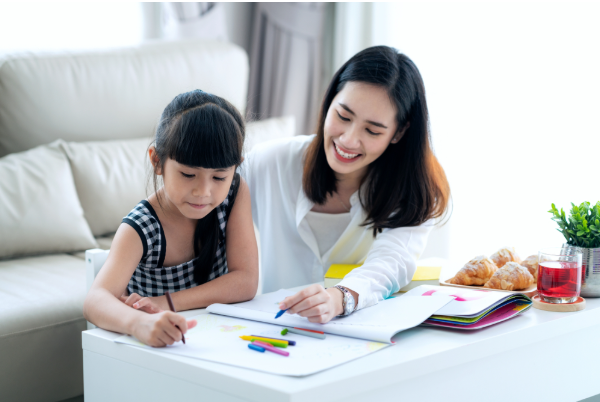
These are actually just a part of the dialogic reading techniques, and there are some additional tips for dialogic reading. For example, deliberate pauses are important for us. Sometimes, parents may be a bit impatient and expect an immediate response after asking a question. However, we should give children some space and time to answer gradually. Children need time to organize their thoughts and sentences. If we remember the techniques of dialogic reading, they can help us be more patient in our everyday conversations with children.

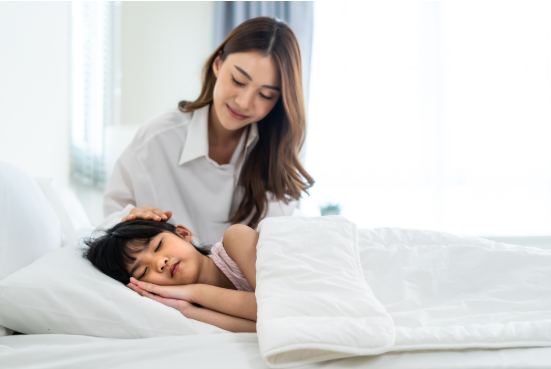
How to deal with young children who are unwilling to sleep on their own and wake up in the middle of the night looking for their parents?

Parenting Articles
Parenting Articles

Source : Registered Clinical Psychologist, Yiu Fong Lee


Many parents experience headaches when their children have trouble sleeping at night. This could be because the children either refuse to sleep or insist on having their parents with them while they sleep. Some children even wake up in the middle of the night and cry unless they find their parents. What methods can help children learn to sleep better or fall asleep on their own?


First, parents need to understand that a child’s poor sleep habits or refusal to sleep can create a vicious cycle of excessive dependence on parental comfort. In this cycle, children require things like being patted, held, or soothed by their parents in order to feel sleepy. Parental presence and soothing become prerequisites for their sleep, and without these conditions, children may wake up in the middle of the night and seek their parents.


Therefore, it’s important to help children learn self-soothing techniques or to teach them how to fall asleep independently. Research indicates that around three-month-old infants gradually begin to develop the ability to self-soothe. By about nine months of age, 50 to 80% of infants can sleep through the night. Parents should have confidence in their child’s ability to self-soothe and fall asleep on their own, and they can assist in this process.


However, what we need to help them develop is to establish a bedtime routine, including the bedroom environment. It’s best to have a completely dark room because darkness stimulates the production of melatonin, a substance in our brain that helps us feel sleepy and speeds up our sleep. Secondly, we should try to establish a specific bedtime ritual for the child, which could involve cuddling them to sleep, singing, giving a massage, or telling a story – but it should be just one designated activity. You can discuss with the child what this designated activity should be, something they would enjoy. Every night at that time, we perform this designated activity, then turn off the lights and go to sleep. This designated activity will signal to the child’s brain that it’s almost time to sleep.

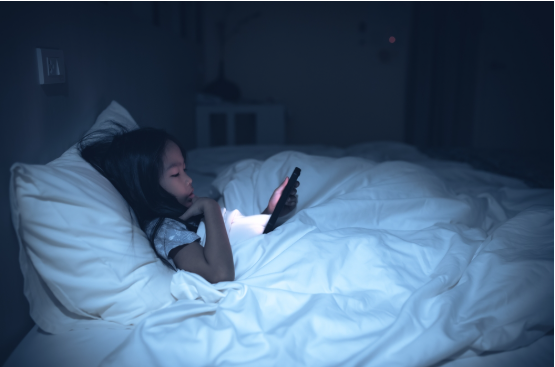
Thirdly, it’s important to remember that blue light can have a significant impact on children. Blue light can disrupt the secretion of melatonin in our brains, which can affect sleep and lead to insomnia or poor sleep quality. Therefore, parents should ensure that there are absolutely no electronic devices in the bedroom, and children should not be allowed to use any electronic devices in the hour leading up to bedtime. This can help children sleep better.

The fourth method is controlled comforting. This method involves providing comfort to the child but gradually reducing the comforting time as they grow older. For example, you can engage in a conversation with the child, saying, “I’ll stay with you for 5 minutes, and then Mommy will leave. After 5 minutes, I’ll come back to check on you. If you can try to close your eyes and stay quiet here, Mommy will give you a kiss.” Then, slowly increase the time before leaving the room, maybe 5 minutes, 10 minutes, or 15 minutes, allowing the child to gradually learn to fall asleep on their own and develop self-soothing abilities.


What should we do if the child wakes up in the middle of the night and seeks their parents’ presence? The same principle applies here: stay with the child for a while and then encourage them to fall asleep independently. If possible, keep extending the time until they can fall asleep on their own.

How to Arrange Pocket Money for Children?

Parenting Articles
Parenting Articles

Written by: Recognized Financial Planner, Miss Hui Kin Ting


Today, let’s talk about how to manage children’s pocket money and help them establish the right financial values. When parents start giving pocket money, they should also teach children how to save, spend wisely, and exercise control over their finances. As children grow older, parents can also guide them on how to grow their wealth.


When to start giving pocket money to children?

Parents can start giving pocket money to children when they enter the first grade of primary school. Unlike kindergarten, primary school students begin to grow and become more independent, develop a sense of numbers, and gradually understand the purpose of money. Giving pocket money at this time can cultivate their correct attitude towards financial management.


Classification based on children’s age:


  1. Grades one to three of primary school:

Parents should mainly teach children how to use and save their pocket money, encouraging them to save more. To guide children in using their pocket money wisely, parents can set a proportion for allocation, for example, 70% for spending and 30% for saving. However, parents should approach this with encouragement, as enforcing it might lead to a loss of interest in saving. Additionally, parents can encourage children to keep a financial diary, recording income and all expenses daily. At the end of each month, parents can review and summarize the diary with their children, helping them understand their spending patterns for improvement.

  • Grades four to six of primary school:

During this stage, you can begin to introduce elements of rewards to cultivate the concept of “rewards for achievements.” For example, good performances (such as scoring 100 on a test) could earn additional rewards. However, parents should be cautious not to overly emphasize rewards to prevent the development of materialistic traits. Children should understand their basic responsibilities and not view everything as a transaction. Additionally, you can encourage saving by introducing “interest.” This could involve setting up a bank account or using some savings tools to give them a preliminary understanding of wealth growth.


How much is a reasonable amount for pocket money?

Parents can decide the amount of pocket money based on their children’s actual needs, self-management abilities, and their own financial circumstances. The amount can also increase as the children grow older.


During primary school, meals and transportation are usually arranged by parents. Parents can explain to their children that if they want to buy additional things they like, such as toys, stationery, or extracurricular books, they must use their pocket money, fostering their financial management skills. For children in grades one to three, parents can provide pocket money on a daily or weekly basis, suggesting 5 to 10 yuan per day. For children in grades four to six, who have developed some money allocation skills, parents can start providing monthly pocket money, recommending an amount of approximately 400 to 600 yuan. When children enter secondary school, where they may handle their meals and transportation, the pocket money should be adjusted accordingly.

Finally, I want to emphasize that financial ethics are more important than any financial skills. Parents can instill appropriate concepts and values in their children through daily life, such as reading stories of successful individuals’ financial journeys. This helps establish the correct attitude towards wealth, enhance a sense of responsibility and self-control, and learn to cherish and plan for the future diligently to achieve financial goals.

The reasons for a child’s reluctance to go to school

Parenting Articles
Parenting Articles

Source:  Psychiatrist, Dr. Leung Yuen Shan


Several months ago, a girl began refusing to go to school. Initially, it was just a reluctance to attend school, but after a few weeks, she started hiding in her room, experiencing issues with eating and sleeping. Later on, she became very irritable, had negative thoughts, and even had difficulty breathing, shortness of breath, and started feeling anxious. She also couldn’t sleep at night and wanted her mom to be with her, but her mother had to work and couldn’t stay with her, so she sought medical advice. A child’s refusal to attend school is causing a lot of anxiety for many parents. Skipping school for a day or two may be acceptable, but not attending for one to two months can result in falling behind in studies, and the child may miss exams, potentially leading to grade retention. This is a problem that many parents find distressing.


In fact, not attending school is just a symptom, and the most important thing is to understand the underlying reasons. There can be several reasons for not attending school, such as social issues, bullying, shyness, academic problems, or attention deficit problems. Additionally, anxiety and depression could be bothering the child, and in some cases, it may go unnoticed for years.


If these issues are not addressed in a timely manner, they can build up, and the child may eventually become unable to cope and refuse to go to school. A child’s reluctance to attend school can also be linked to family issues, changes in family dynamics, or changes in the home environment as a way to seek attention.”

These various reasons could all lead to him not going to school. The most important thing for us is not to jump to conclusions and the next judgment. If parents point out directly that he is lazy, unwilling to face, and wants to avoid going to school, it will only put more pressure on the child. Instead, we should approach it with empathy and help the child gradually break down the issue. Many times, the difficulty lies in the fact that they may not be willing to speak out because they may not even know the reasons themselves. When you ask him, he won’t say, or he may answer that he doesn’t know, which can be challenging for parents. Parents should not give up in this situation, and they should not use a critical approach.


Parents must not excessively force him. Try to have a conversation with him in a friendly manner and guide him to reveal the underlying reasons and the specific challenges he faces. Because it is crucial to have this information, if you force him, he will shut down and not communicate with you, making it even more challenging later on. I’ve encountered many cases where parents tried everything to get their child to school, and when they finally did, the child blamed their parents for forcing them to go to school, which made them even more afraid later.


First, we should avoid using intense actions to force him and try to understand the reasons behind his behavior. If he starts to gradually open up and talk, that’s a good sign. But if you feel that it’s too difficult to get through to him, and he’s becoming increasingly resistant to going to school, that’s when we recommend seeking professional help to identify the root causes of the problem

How to help children who are rather clumsy?

Parenting Articles
Parenting Articles

Family Marriage & Art Therapist, Ko Wing Oi (Wendy)


Parents often mention that their children are clumsy, often tripping or dropping things easily. This is related to hand-eye coordination and even the development of finger muscles. Many toys are now designed to train a child’s finger muscles from as early as a few months old.


Many parents are aware that various games can train finger muscles. But besides finger muscles, how can we train children to handle, grasp, or manipulate objects using their fingers? Balance is also crucial.


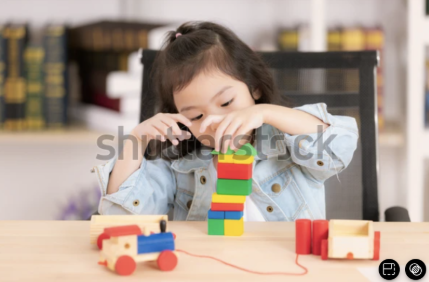
In fact, many toys can help train balance, and finger muscles can be developed in the process. For example, stacking games with different shapes, sizes, colors, and numbers can be used. When a child picks a die with a green side and the number 2, they have to find the corresponding green piece with a 2, and then pick another die, let’s say it’s blue with a 5, and find the blue piece with a 5, and continue stacking. This trains children on how to stack the pieces to maintain balance and prevent them from toppling over.

Another toy is the Russian stacking block puzzle, which is more complex in terms of layering and might be more interesting to children. Children can move the bottom block and then stack the Russian block puzzle pieces. This toy presents a certain level of difficulty, training children’s fingers, critical thinking, finger muscles, and balance.


Of course, clumsiness and accidents are also related to their level of concentration. For example, when a child is holding a cup of water, but their eyes are not on the cup; they are watching TV or listening to the adults around them. So, in addition to training their hand-eye coordination and balance, it’s also essential to train their concentration.

“The reading of many books is as important as traveling a thousand miles.”

Parenting Articles
Parenting Articles

Written by: Education expert, Chu Wud Man


Children and I went on a study trip to Sabah, Malaysia, in the early years. The winter sun was bright, and the five-day, four-night experience was richly rewarding. Taking a boat ride to observe proboscis monkeys in the mangroves was a highly appealing activity. In the evening, thousands of fireflies hung low on the trees, turning the tall trees into sparkling Christmas trees. I stood beside the children, watching their lively and excited expressions, deeply believing in the importance of both “reading ten thousand books” and “traveling ten thousand miles.” Without saying much, just looking at the experience of having a buffet breakfast in the morning over the four days, it was indeed a valuable lesson in civic education for the children.


On the second day in Sabah, the children woke up and followed the teacher into the hotel’s buffet restaurant for breakfast. The diverse and delicious food made the children salivate. They wandered around with plates in hand, unable to decide what food to take first. When they encountered interesting decorations, they would loudly call their companions to come and see. Hungry children filled their plates with a large serving of fried rice, with salad and two slices of watermelon placed next to the plate like small hills. The excitement and noise of the children in front of the delicious food seemed to make them forget the teacher’s instructions and requests until the lead teacher approached, reminding and guiding them, gradually calming the situation.

After breakfast, during the gathering, I discussed the situation observed earlier with classmates, making the children aware that their behavior had disrupted other restaurant patrons and lacked the proper etiquette. The teachers reiterated the points they needed to be mindful of and then continued with the itinerary.


In the following days, I arrived at the restaurant very early, sitting aside, sipping coffee, and observing the students’ behavior. The children arrived one by one, walking lightly, taking the time to carefully consider and plan their desired breakfast, and then politely selecting some food to enjoy.

Occasionally, they would still gather in small groups in front of interesting food, chatting softly. However, overall, they were mindful of the restaurant’s etiquette, showing consideration for the needs of the dining room and respecting other patrons. The waitstaff also praised the children for their excellent behavior, and visitors from different nationalities engaged in friendly conversations with the children. The relaxed and warm breakfast provided the children with opportunities to learn etiquette.


The learning experience during the study trip is extensive, ranging from understanding things in different regions to personal self-management and team discipline. The progress made by the children over the four mornings may prompt parents to engage in deeper reflections.

How to reduce the side effects of rewards?

Parenting Articles
Parenting Articles

Written by: Pang Chi Wah, Registered Educational Psychologist at the New Horizons Development Centre


Some parents have the following thoughts about rewards: “The original intention was to praise the child’s good performance, but now the reward seems to have become a bribe.” “He has become utilitarian, calculating the degree of his effort based on the size of the reward.” “Sometimes I even feel that the child has become greedy. The rewards that once attracted him no longer have the original effect. Only by providing richer rewards is he willing to make an effort.”


In fact, in the commercial society where adults are located, bosses also use rewards and bonuses to praise employees’ outstanding work performance and inspire employee morale. Many early childhood education experts have also proposed a reward system, using children’s favorite food, toys, etc., to train and cultivate their good behavior habits. Rewards have become our usual way, but parents’ worries are not unfounded. How can we reduce the side effects of rewards?


There are mainly two directions to reduce the side effects of rewards. One is that parents can change the type of rewards, and at the same time, they must not encourage children with money, otherwise it will make children prioritize money and everything will be based on materialism. The rewards given by parents can be changed from one-time enjoyment such as food, gradually transformed into long-term gifts, such as entertaining toys, academic stationery, etc., and later can be rewarded spiritually, such as parents giving certificates, applause and other non-material encouragement.

The second approach is that parents can gradually reduce the proportion of rewards given according to the following three criteria:


  1. Increase the number of expected behaviors completed by the child before giving a reward.

Example: If parents expect the child to put the toys away in the toy box after playing, initially, parents may need to give stickers as encouragement for the child to be willing to tidy up the toys; afterwards, the child should put the toys in the toy box several times on their own before the parents give sticker rewards.


  1. Raise the standard of requirements according to the child’s performance, and only give rewards after the child completes behaviors of higher difficulty.

Example: Initially, as long as the child puts all the toys in the box, they can be given sticker encouragement. Then the requirements can be raised, the child needs to put all the toys in the box, and carefully organize the toys and place them properly to get the sticker.

  1. When the child is relaxed and happy or makes a request, parents can make demands on the child without providing rewards.

Example: The child requests to watch their favorite TV show, the parent proposes that the child needs to tidy up the toys into the toy box before they can watch TV.


Through these two principles, parents can systematically dilute the function of external material rewards, let children internalize the motivation behind completing good behaviors, gradually reduce dependence on external encouragement, and make them gain a sense of success from within as the main source of their learning motivation.

Categories
Parenting Articles Parenting Articles Parenting Articles Parenting Articles Parenting Articles Parenting Articles Parenting Articles Parenting Articles Parenting Articles Parenting Articles

Can children be naughty?

Parenting Articles
Parenting Articles

Written by: Fung Ji Hei, Game Therapist


When Ji Fung, a first-grader, didn’t return from the restroom after a while, the teacher sent the male class leader to check on him. After a while, the class leader came back panting, saying, “The entire restroom is soaked!” So, the teacher went to investigate personally. Upon arriving at the restroom, the teacher saw a flood, with water and bubbles everywhere, and Ji Fung was “washing his hands” in one of the sinks. The teacher asked, “What are you doing?” He replied, “Washing my hands and seeing why there are bubbles.” To prevent any danger, the teacher stopped Ji Fung’s actions.


Ji Fung is a very curious child, but his curiosity often causes inconvenience for others and himself. He likes to question everything and even more, he likes to try everything. Once, in order to see if he could fit through the hole in the back of a chair, he got his head stuck in it for about an hour. It was only after a worker used tools to break the chair that he was able to free himself. Despite his numerous terrifying experiences, nothing has deterred him yet. The teachers are at a loss because Ji Fung is not a bad student. Punishment alone is futile, so they need to think of other solutions.

“Naughty”: A Multi-faceted View


Describing Ji Fung as “naughty” is perhaps the most fitting, and this trait is quite common among children, albeit to varying degrees. What is “naughtiness”? We often associate it with words like “mischievous” or “playful,” which mostly carry a negative connotation. However, from a positive perspective, naughtiness can have many benefits. First, it’s not hard to see that naughty children love to play; they are motivated to play at all times, and these motivations often stem from their curiosity. They satisfy their curious thoughts through different methods, sometimes disregarding consequences and limitations to personally try and explore solutions to puzzles. Secondly, most “naughty” children are somewhat clever and know how to play better than others, so they use various ways to express their creativity, coming up with ingenious methods to play. In summary, “naughtiness” can be seen as a mix of curiosity and creativity, only becoming problematic when it is not properly controlled and leads to trouble.

What can you do if you have a “naughty” child around?


  1. Relax


Naughty children can easily make their caregivers nervous because they often do unexpected things, sometimes even causing embarrassment. We need to understand that naughtiness is one of the children’s natural traits, and they are in the process of learning. We need to patiently keep pace with their growth, avoiding suppressing their development for the sake of our own pride.

2.Set Boundaries


Naughty children often cross boundaries due to a lack of understanding of them. We can set rules with them and implement them effectively. This not only ensures the children’s safety but also establishes their understanding of limits.


3.Satisfy Curiosity


To address the issue at its root, we need to satisfy their curiosity. The method is to teach them how to think and find answers. For example, parents can teach them to find answers through reading or take them to nature to train their observational skills, which can help them face future challenges.

How to discover hidden talents and potential?

Parenting Articles
Parenting Articles

Written by: geneDecode Genetics Education Professional Team

Innate potential is an ability that everyone is born with, a genetic characteristic that is present before growth. From birth, each child possesses their own unique talents. In the process of a child’s growth, emotional intelligence, IQ, and the ability to withstand setbacks, among others, are all necessary conditions for success. Among these conditions, each child’s talents are different. Can we discover their innate talents in the innocent eyes of children? Can we be sure to capture these talents and guide the children on a path of growth that suits them?

Here is a mother’s experience:

‘Amy is 4 years old this year. As she grows up, she is becoming more and more curious about the things around her. Amy’s father noticed that she seemed to show a special interest in doodling when she was 2 years old. I casually gave her some paint, and she could use a brush, crayons, or her fingers, even a bottle of ketchup, to paint. No one knows what she is painting, maybe only she knows. Amy’s father and I both think that she should be allowed to grow freely. I found that she seems to like painting very much. If she is really good at it, I think we will definitely cultivate her well.’

Amy’s parents are wise. Each child has different talents hidden in different fields. When a child’s talent is found, if it can be cultivated and paid attention to by parents and teachers, it will save a lot of detours in the direction of success. However, the most important thing is for children to have a sense of success from a young age and grow up to be happy and confident people.

Scientific research confirms that the period of infant growth is the fastest and most sensitive period of brain development, and it is also the best time to develop a child’s talents. The cultivation of talents is time-sensitive, and scientists call this irreplaceable stage the ‘talent time window

Only at the most important and appropriate moments, with the right education and cultivation, can innate potential develop into real abilities. Missing these key moments of development, a child’s talents may relatively weaken, and their innate potential may no longer stand out. Here are some key moments for reference:

Key Moments for Talent Development

Memory: 12 months to 12 years old

Emotional Intelligence: 2 months to 22 years old

IQ: Birth to 13 years old

Music: 2 months to 5 years old

Drawing: Birth to 15 years old

Sports: Birth to 12 years old

‘Whether Amy can become a painter when she grows up, I can’t confirm, we are just observing. It can be said that it is completely based on feeling. Talent is hard to say, maybe she has talents in other areas, or sometimes it is not obvious, then it is hard for us to discover. We can only do our best and observe her from as many angles as possible.’

This is not just a worry for Amy’s mother. Every parent dreams of their child’s success, but the key is how to accurately discover a child’s talents.

Many parents are trying, hoping to find clues in their child’s behavior, hoping to find ways to discover a child’s talents early. Those parents who seem to have found a method, according to their own judgment and willingness, send their children to various specialty classes and youth classes to learn various skills, hoping that one day, they can become experts in this field. For this goal, parents spare no effort to invest a lot of money and time.

However, doing so seems to not only waste a lot of money and time, but also those originally intelligent children are more likely to lose their spirit in the multitude of educational directions, their talents are delayed or even obliterated. They passively move from one tutoring class to another specialty class, learning things they neither like nor are good at.

Childhood, for children, is no longer a memory of happiness and beauty, but of pressure and worry. The saddest thing is that when they grow up, they have more complaints about their parents.

Is there a better way to understand a child’s talents, personality, and traits, so as to teach students in accordance with their aptitude and cultivate them in a directed way?

Willing to share – Parents set an example

Parenting Articles
Parenting Articles

Written: Education expert, Cheung Wai Ching

The crow accidentally found a piece of soap. After washing its feathers in the basin, the crow became fragrant all over. Deciding to share this soap with other animals, the mouse, rabbit, little monkey, and big bear all took turns using it. Finally, it was the elephant’s turn. After the elephant finished bathing, the soap was nowhere to be found. The crow found it strange and anxious, thinking the elephant was playing a joke on it. The crow, with a kind heart, shared its good thing with its friends, but in the end, the item was gone. We all know that soap gets smaller as it is used, which is an inevitable fact. The crow didn’t expect that its well-intentioned sharing would result in losing what it originally possessed. Although the crow was a bit reluctant to part with its soap, when it smelled the soap fragrance emanating from its good friends, it felt happy and thought it didn’t matter.

With an increasing number of single-child families in society, coupled with busy parents compensating with material things, children tend to think that everything is for their exclusive enjoyment, and others are not allowed to touch. In such situations, what can parents do?

The joy of sharing is an abstract emotion that requires the accumulation of years along with the experiences of many life events. It is not something that can be achieved overnight. The most effective education on sharing comes from the example set by parents and educators. There is a lady who works as the chief editor in a publishing house. During her daughter’s summer vacation, she took her to the office. At that time, the company was handling a batch of books donated to children in remote areas, totaling a few hundred books.

The daughter asked her, “Mom, do you have to donate so many books? You could sell them for a lot of money! You might incur a huge loss this way. Can’t you donate fewer books?” The lady replied, “No one is telling me how much to donate, and no one is forcing me to do it. It’s my own choice. What are you worried about?” The little girl said, “I’m afraid you’ll donate all the books, and we’ll lose too much. Then we won’t have any money ourselves!” The lady teased, “Well then, I won’t donate at all. After all, those other kids aren’t my children. Why should I care if they have money to buy books?” Playing along, the mom intentionally teased her daughter. The girl clarified hastily, “I didn’t mean not to donate at all. I just meant you should donate fewer books! Keep some for later, and donate gradually!”

The mom, who works as an editor, told her, “Daughter, if I take these books to sell and make money, our family would certainly be happy. But now that I’ve donated the books, many children will be happy because they have books to read. I will also be happy because these books may give them some hope and dreams for life and the future. My happiness cannot be measured in terms of money.”

Parents are the best role models for children. In daily life, when parents show care and assistance to others, it naturally has a subtle influence on their children. Parents should set an example of sharing with others, regularly taking the initiative to care for and assist others. The place where the author lived during childhood was populated with many residents, resembling what Cantonese films call “one floor, fourteen households.” Although having many people naturally leads to friction, neighbors were accustomed to sharing delicious snacks they made with everyone. Additionally, in daily life, common items such as oil, salt, soy sauce, and vinegar were borrowed from one another. These small acts cultivated a sense of sharing in our generation.

The emphasis in “Willing to Share” is on the word “joy.” It is about feeling genuine happiness from being able to share with others. Only those who are truly tolerant, generous, and enthusiastic are willing to share with others. Similarly, only those who are genuinely confident, kind, and open-minded are happy to do so. In other words, if children can truly enjoy sharing, they possess all the valuable qualities mentioned above, which are more important than achieving good grades.