October 2025
Written by: Child Psychological Development Association, Psychological Counselor, Mr. Ching Wai Keung
We all know that different parenting methods have a significant impact on a child’s physical, emotional, and intellectual development. However, in this article, I do not intend to share expert theories but rather recount an incident I witnessed firsthand.
Case Sharing: Witnessing the Use of Aggressive Parenting
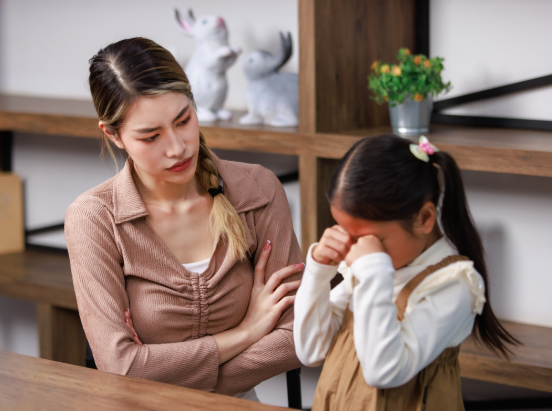
Once, while working in Beijing, I observed several mothers with their children waiting outside a shopping mall for it to open. Among them, a little girl (referred to as A, approximately 3 years old) stood out as notably aggressive. When other children entered her “territory,” she would unhesitatingly launch attacks. Before long, A slapped another child, B (around 3 years old), who immediately burst into tears. From my observation, the pain wasn’t the primary cause; B cried due to the sudden shock.
B’s mother hurriedly approached to console him, but even after almost 30 seconds, B continued crying. Surprisingly, his mother brought him in front of A, held B’s hand, and instructed him to “hit her back.” B refused, clinging to his mother, who repeatedly urged him to retaliate. She forcibly held his small hand, demonstrating the action of an attack, insisting more than ten times. However, the little boy grew even more frightened, withdrawing his hand and cowering against his mother.
On the other side, A’s mother held a few months old infant in one hand and restrained A with the other. She scolded and sometimes even hit her daughter. The more the mother struck, the more A resisted, launching attacks on nearby children, creating a chaotic scene.
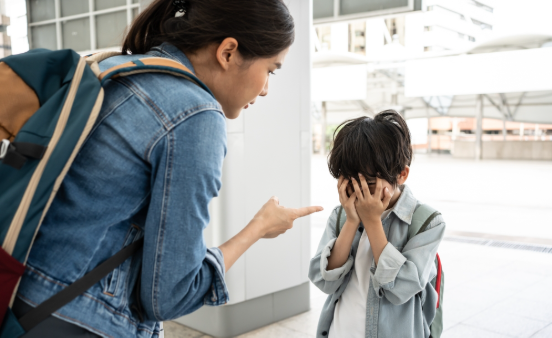
We should patiently understand the reasons behind a child’s behavior.
This has led me to a lot of reflection: we tend to focus on improving the visible behavior and overlook the underlying reasons.
The child who was slapped needed a sense of security the most at that moment, not a retaliatory response. However, it seems that the mother either did not provide this or provided it inadequately. When the child calmed down, the mother proceeded to explain that hitting others was unacceptable behavior and attempted to explain why the other child might have attacked.
As for the little girl who launched the attacks, even though the infant might not have been her brother (possibly a child her mother was caring for), at her age, she would still experience jealousy. She seemed to lack a sense of security, vigorously defending her “territory.” When her mother punished her for her actions, she felt even more unloved, leading to increasingly intense behaviors and creating a vicious cycle.
Many times, a child’s behavior can be infuriating, but before taking corrective action, have we sincerely tried to understand the reasons behind the child’s actions?